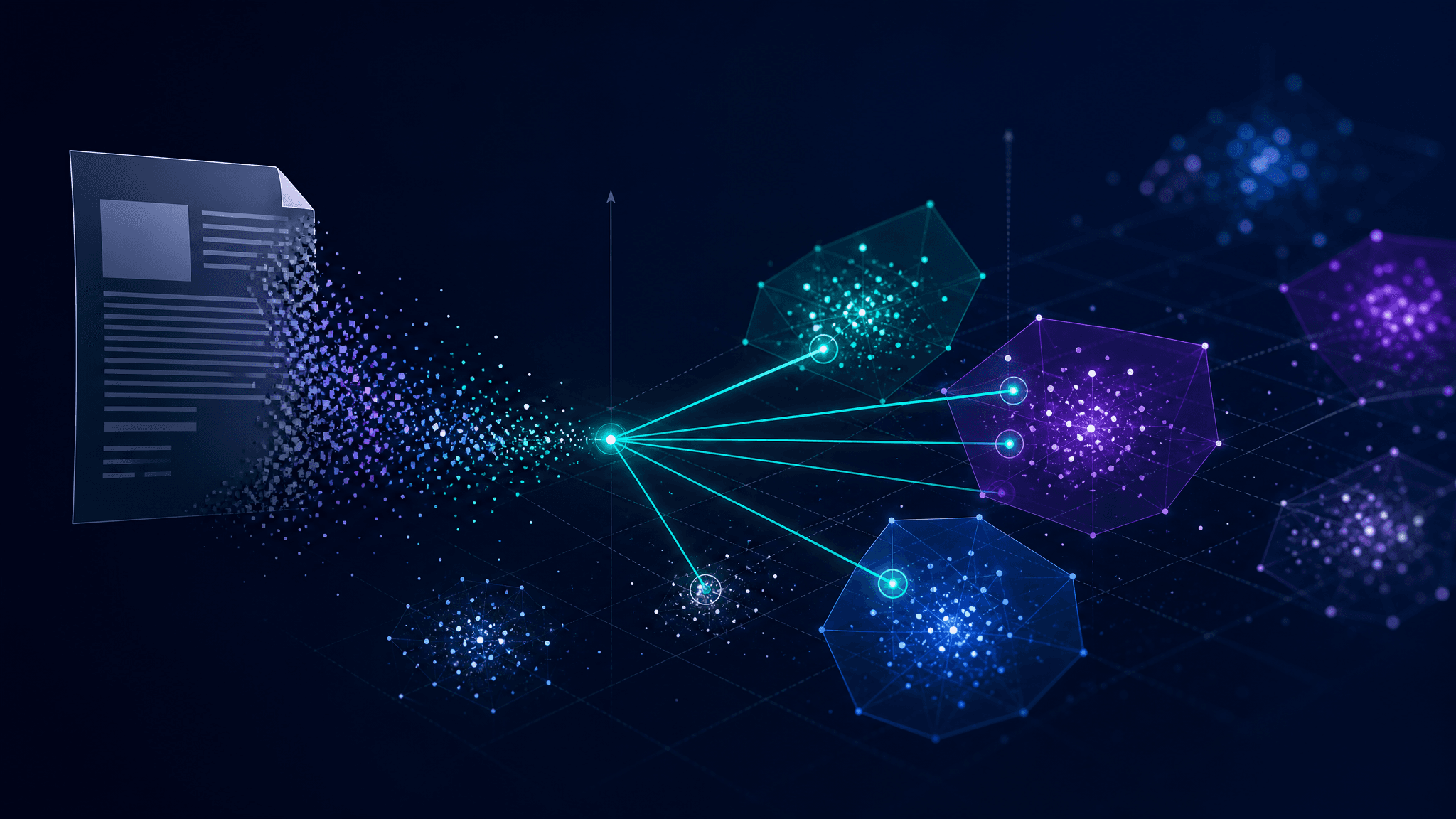
Feature Stores in 2026: The Missing Link Between Data Engineering and ML
By AI Editorial Team | Data Engineering | June 1, 2026
The modern enterprise machine learning stack has a problem. Data engineers build robust pipelines to warehouses and lakes. Data scientists experiment with features in notebooks. ML engineers deploy models to production. Yet somewhere in the handoffs between these teams, the most critical ML ingredient—features—gets mangled, duplicated, or silently corrupted.
Enter the feature store. Once considered a nice-to-have for advanced ML teams, feature stores have become foundational infrastructure in 2026. With 68% of ML teams now adopting them (up from just 22% in 2023), the question is no longer whether to invest in a feature store, but which architecture fits your organization's scale, latency requirements, and data platform investments.
This article explores the state of feature stores in 2026, the leading platforms, the architectural patterns that matter, and the enterprise challenges that still separate successful implementations from expensive shelfware.
The Problem: Why 60–80% of ML Work Is Feature Engineering
If you ask ML practitioners where they spend their time, the answer is remarkably consistent: the majority of effort goes not into model architecture or hyperparameter tuning, but into finding, computing, and validating the right features. Worse, 37% of production ML bugs stem from training-serving skew—situations where features are computed differently during model training than they are at inference time, causing silent model degradation that can go undetected for weeks.
The root cause is structural. In most organizations:
- Data scientists write feature transformations in Python or SQL notebooks, ad-hoc and unversioned.
- Data engineers build ETL pipelines that may or may not match the scientists' logic.
- ML engineers serve features from caching layers that are manually maintained and often stale.
- No one owns the feature lifecycle from ideation to retirement.
The result? Duplicated effort, inconsistent logic, and a growing tax on every new model deployed. Feature stores were designed to solve exactly this—providing a centralized system for feature definition, storage, versioning, and serving that spans the gap between data engineering and ML production systems.
The Core Architecture: Online, Offline, and the Registry
Every production-grade feature store in 2026 shares a similar three-layer architecture:
The registry is the single source of truth for all feature definitions—data types, owners, freshness requirements, lineage, and dependencies. By treating feature definitions as code (stored in Git and versioned via CI/CD), teams gain reproducibility and auditability. This registry also powers feature discovery, allowing data scientists across teams to search for existing features before building duplicates.
In 2026, mature registries integrate directly with data governance tools like Unity Catalog, Apache Atlas, and enterprise data catalogs. A well-maintained registry can increase feature reuse from 15% to 64%, according to industry surveys.
2. The Offline Store (Training Data)
The offline store handles high-throughput batch storage for generating training datasets. It must support point-in-time correctness—the ability to reconstruct feature values exactly as they existed at any historical timestamp, preventing data leakage from future information. Popular backends include Snowflake, BigQuery, Redshift, Delta Lake, and Parquet on object storage.
Point-in-time correctness is not a nice-to-have; it is essential. Without it, models train on data they would not have had access to at inference time, producing inflated offline metrics that collapse in production.
3. The Online Store (Real-Time Serving)
The online store serves precomputed features at inference time with strict latency requirements—typically p99 latency under 10ms. Low-latency key-value stores like Redis, DynamoDB, Cassandra, and Bigtable dominate this layer. Features are materialized from offline to online stores through scheduled batch jobs or streaming pipelines.
The separation between offline and online stores is deliberate. Offline stores optimize for throughput and historical correctness; online stores optimize for latency and availability. The feature store's job is to keep them synchronized and consistent.
The feature store market has consolidated around a few key players, each with distinct positioning:
Feast (Open-Source Leader)
Originally developed at Gojek and now a CNCF sandbox project, Feast remains the most widely adopted open-source feature store, with 12,000+ GitHub stars and over 200 production deployments. Its modular architecture emphasizes flexibility: teams can mix and match offline stores (BigQuery, Snowflake, Redshift, Delta Lake) and online stores (Redis, DynamoDB, PostgreSQL) without vendor lock-in.
In 2026, Feast continues to evolve. The latest versions support streaming ingestion from Kafka and Flink, and benchmarks show p99 latency of 4.2ms when paired with Redis and a Java gRPC server. Feast suits teams with Kubernetes expertise that want full control over infrastructure and zero licensing costs. Typical infrastructure cost: $200–500/month for small deployments.
Tecton (Enterprise Standard)
Built by the creators of Uber's Michelangelo platform, Tecton is the gold standard for managed, enterprise-grade feature platforms. With 150+ enterprise customers, Tecton offers a unified solution covering batch, streaming, and on-demand transformations, plus integrated monitoring, governance, and audit logging out of the box.
Tecton's native streaming support and real-time aggregation engine are particularly valued in regulated industries where lineage tracking and access control are non-negotiable. Pricing starts around $2,000/month and scales to $20,000+ for large deployments. For teams that need streaming features and want minimal operational overhead, Tecton is often the pragmatic choice.
Fennel (The Transactional Edge)
Acquired by Stripe and representing a newer class of transactional feature stores, Fennel focuses on features derived from operational databases and event streams with strict consistency guarantees. Unlike batch-heavy platforms, Fennel is designed for real-time decisioning systems—fraud detection, payment authorization, and dynamic pricing—where milliseconds and data freshness matter as much as correctness.
Fennel and similar platforms (like Chalk) reflect a 2026 trend: the blurring boundary between feature stores and stream processing. As more ML models move from batch predictions to real-time inference, the demand for transactional consistency in feature computation is growing.
Cloud-Native and Emerging Players
- Databricks Feature Store: Native integration with Unity Catalog and MLflow, ideal for teams already in the Databricks ecosystem.
- SageMaker Feature Store: AWS-native, simple to deploy, but limited to the AWS stack.
- Vertex AI Feature Store: Tight BigQuery integration for GCP-native workflows.
- Hopsworks: A complete ML platform with strong real-time streaming transformation support and an open-core model.
- Streaming Engines: Tools like Bytewax, Feldera, Materialize, ksqlDB, and RisingWave are increasingly used alongside or instead of traditional feature stores for pure streaming feature computation.
Real-Time Feature Computation: Streaming as First-Class
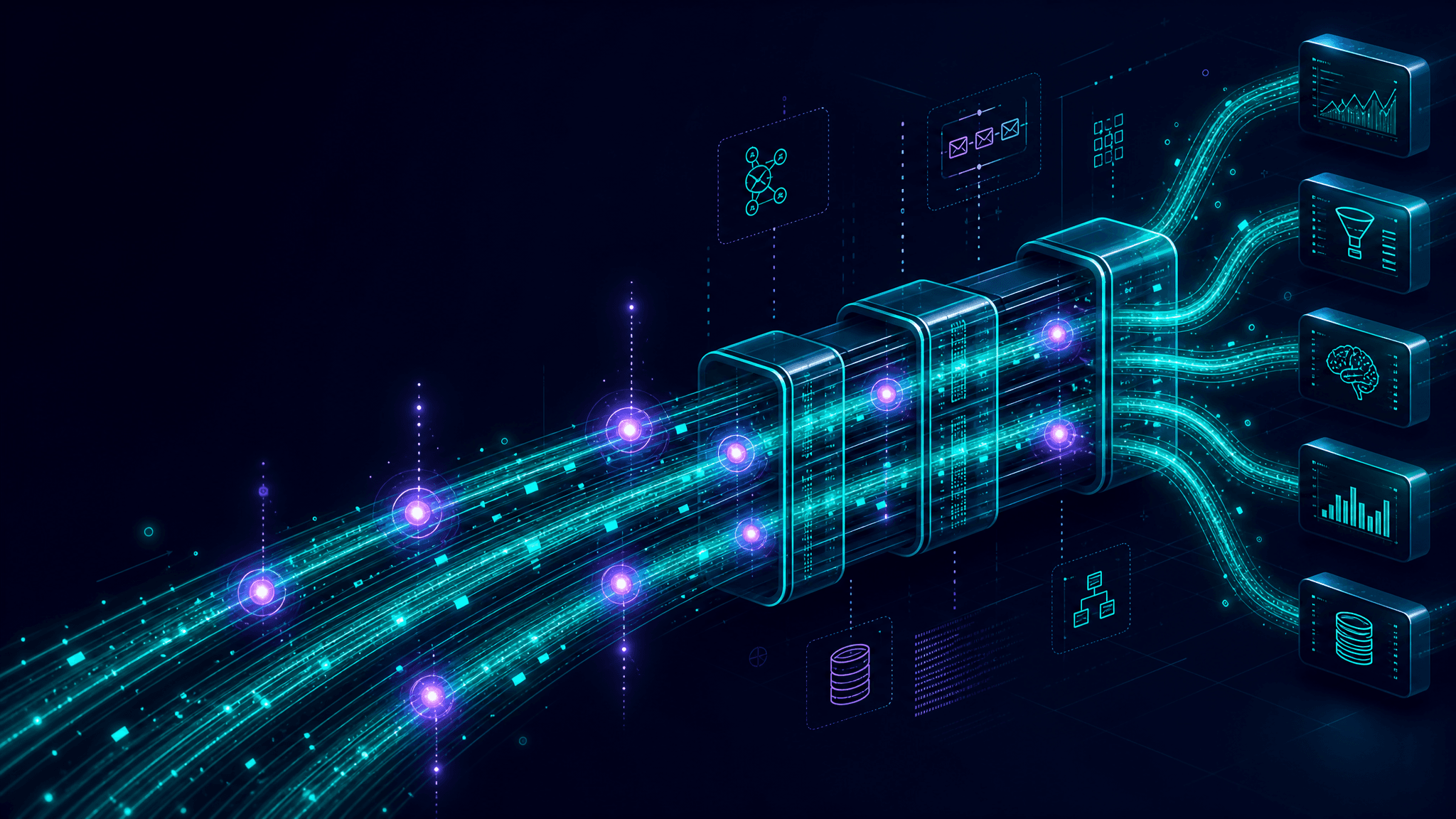
The defining shift of 2026 is that streaming features are no longer an afterthought. In earlier generations, feature stores were predominantly batch systems with bolt-on streaming support. Today, leading platforms treat stream processing as a first-class citizen.
This matters because business contexts increasingly demand real-time inference: fraud detection cannot wait for the next batch job; recommendation systems must react to clicks within seconds; dynamic pricing needs supply and demand signals instantly.
Modern streaming feature pipelines typically combine:
- Apache Kafka or Redpanda for event ingestion
- Apache Flink or Spark Streaming for windowed aggregations
- Materialized views in operational stores (Redis, DynamoDB) for low-latency serving
- Automatic TTL-based cleanup to evict stale data and control storage costs
The challenge is maintaining online-offline consistency when the same feature logic must run in batch (for training) and streaming (for serving). Platforms like Tecton and Feast address this by allowing unified feature definitions that compile to both batch and streaming jobs, ensuring identical semantics across environments.
Feature stores do not exist in a vacuum. In 2026, the most successful implementations are those that embed naturally into existing data platforms rather than forcing yet another silo.
- Snowflake: Feast and Tecton both offer native Snowflake connectors for offline storage, allowing data teams to leverage existing warehouse infrastructure without data movement.
- Databricks: The Databricks Feature Store is tightly coupled with Unity Catalog for governance and Delta Lake for storage, making it a natural fit for Spark-heavy environments.
- BigQuery / GCP: Google's Vertex AI Feature Store and Feast's BigQuery integration allow teams to keep data in place while serving features to models running on GKE or Vertex AI.
The philosophy of "compute where the data lives" has won. Feature stores that require heavy data egress or duplicate storage are increasingly viewed as technical debt.
Enterprise Adoption Challenges: Beyond the Technology
Despite clear benefits, feature store adoption in the enterprise is not frictionless. The most common obstacles in 2026 include:
Organizational Silos
Feature stores require data engineering, ML engineering, and data science teams to agree on standards, ownership, and workflows. In organizations where these teams report to different VPs and use different tooling, this alignment can take months.
Feature Quality and Monitoring
A feature store is only as good as the features it serves. Teams must invest in:
- Data quality checks (Great Expectations, Soda) for feature pipelines
- Distribution drift monitoring (PSI, KS tests) to detect when feature statistics shift
- Latency monitoring for online serving (p50/p95/p99 tracking)
- Feature importance tracking to identify and deprecate unused features
ROI Measurement
Feature store ROI is real but indirect. Teams that implement feature stores report:
- 52% faster deployment times (from 3–6 weeks to 2–5 days)
- 64% higher feature reuse across models and teams
- 65% fewer production incidents tied to training-serving skew
However, these benefits are often distributed across teams and hard to attribute to a single project. Successful organizations treat feature stores as shared infrastructure funded centrally, not as a cost center charged to one ML team.
The "Do We Even Need This?" Debate
A recurring 2026 discussion, especially among smaller teams, is whether a dedicated feature store is necessary at all. For organizations with fewer than three models in production, dbt + data warehouse + Redis cache may be sufficient. The inflection point typically arrives when:
- Multiple teams begin duplicating feature engineering effort
- Real-time inference with <100ms latency becomes a requirement
- The number of production models exceeds 5–10
- Regulatory or audit requirements demand feature lineage and versioning
Key Takeaways
-
Feature stores are now essential infrastructure, not niche tools. With 68% adoption in 2026, they have crossed the chasm from early adopter to mainstream MLOps.
-
Point-in-time correctness and online-offline consistency are non-negotiable capabilities. Any platform you evaluate must solve training-serving skew as a core design principle.
-
Platform choice depends on your constraints: Feast for control and cost efficiency; Tecton for enterprise scale and managed streaming; Databricks or cloud-native options if you're already embedded in those ecosystems.
-
Streaming features are first-class in 2026. Batch-only feature stores are a fading paradigm. Evaluate platforms on their native streaming and real-time aggregation capabilities.
-
Technology is only half the battle. Organizational alignment, feature governance, and monitoring investments determine whether a feature store becomes a productivity multiplier or expensive shelfware.
-
Start with the registry, not the infrastructure. Even before investing in a full platform, a centralized feature catalog with documentation, ownership, and discovery can deliver immediate value.
The Bottom Line
Feature stores have matured from an experimental MLOps component to the critical bridge between data engineering and machine learning production. In 2026, they solve problems that every growing ML organization faces: feature duplication, training-serving skew, slow deployment cycles, and governance gaps.
The platforms are ready. The architectures are proven. The remaining challenge is organizational: building the cross-functional alignment, standards, and ownership models that let a feature store deliver on its promise. Teams that solve this in 2026 will move faster, break less, and scale ML with confidence. Those that don't will find themselves rebuilding the same features, debugging the same skew, and asking why their models perform worse in production than they did in the notebook.
The missing link isn't missing anymore. The question is whether your organization is ready to cross it.
AI Editorial Team covers the infrastructure, platforms, and practices shaping enterprise AI and data engineering. Follow our Data Engineering category for more deep dives.

 data-engineering